01
Backend Engineering
APIs, authentication, databases, queues, and the decisions that determine whether a system stays reliable when things get complicated.
API DesignData ModelingSystem Design
A little about me
I'm Shashank Pandey, a computer science student, full-stack developer, and someone who naturally gets curious about the things most people don't see.
I build applications, work with cloud infrastructure, and spend a lot of time thinking about how software behaves beyond the happy path. What happens when a request fails? Where does the data go? What breaks when usage grows?
Those questions have gradually pulled me toward backend engineering, system design, and the decisions that turn working code into dependable software.
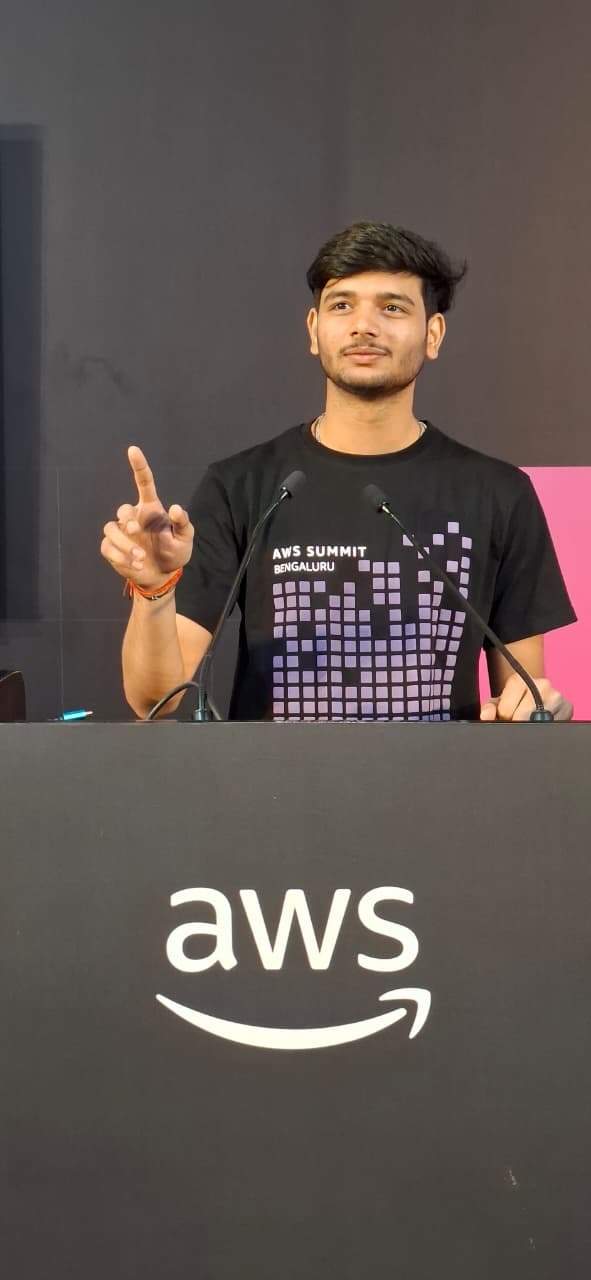
Shashank Pandey
Developer · Builder · Curious mind
The bigger picture
Somewhere along the way, I became just as interested in the decisions around the code as the code itself. Architecture, deployment, developer experience, and the little details that determine whether a product is genuinely useful.
I like working across the stack because it helps me understand the bigger picture. But I naturally gravitate toward the backend: data flows, APIs, infrastructure, security, and how everything fits together when an application is running in the real world.
I also enjoy thinking like a product builder. Not every problem needs another framework or another dashboard. Sometimes the most interesting part is figuring out what should exist in the first place.
What keeps me interested
Different areas, one common thread: understanding how things work and finding ways to make them work better.
APIs, authentication, databases, queues, and the decisions that determine whether a system stays reliable when things get complicated.
I enjoy taking applications beyond localhost. Deployment, AWS, containers, serverless architecture, and figuring out what production actually demands.
I gravitate toward real operational problems. I want to understand what's broken, why it matters, and whether there's a better way to solve it.
Beyond the terminal
Technology has a community side that I care about just as much as the engineering.
Community & leadership
At Lovely Professional University, I've helped build a student developer community around cloud technology, hands-on learning, technical events, and opportunities to connect with the wider developer ecosystem.
Organizing events has taught me that building a great technical experience involves much more than the technology itself. There's coordination, communication, logistics, and making sure people leave having learned something useful.
Explore the communityEngineering
Designing, developing, and improving real applications and developer tools.
Community
Creating spaces where developers can learn, collaborate, contribute, and meet people building interesting things.
A few chapters so far
From full-stack applications to backend services, I learn by taking ideas from a rough concept to something people can actually use.
Through AWS Student Builder Group at LPU, I've worked on developer experiences, technical events, and creating opportunities for students to build together.
Working on infrastructure, automation, and event platforms has made me increasingly interested in architecture, trade-offs, and the operational side of software.
How I approach things
I want to know what problem we're solving, what constraints matter, and why a particular solution makes sense before committing to it.
Making something work is the beginning. Failure cases, maintainability, deployment, costs, and the experience of the next person matter too.
Documentation and theory are useful, but there's a different kind of understanding that comes from shipping something, finding the edge cases, and fixing what breaks.
The current chapter
I'm continuing to strengthen my foundations in backend engineering, system design, cloud architecture, and data structures and algorithms.
I'm also interested in building products that solve operational problems at a larger scale, where reliability, maintainability, and sensible engineering decisions matter as much as getting the first version out of the door.
I don't expect to know everything before starting. I'd rather take on a meaningful problem, learn what I need, build something, and improve it with every iteration.
An outside perspective
A perspective from our conversations, not a claim that I know every side of you.
Shashank doesn't seem content with just knowing how to use a tool. He wants to know why it works, when it stops making sense, and whether there's a better way to approach the problem.
He's also drawn to work that connects technical execution with a bigger outcome. Building a platform, improving an engineering workflow, organizing a developer event, or turning an idea into something people can actually use. There's a recurring interest in making things happen, not just discussing how they might happen.
One potential challenge is that curiosity and ambition can pull him in several directions at once. There's always another technology to explore, another project to start, or another idea that seems worth pursuing. Learning to choose what deserves sustained attention may be just as important as learning the next technical skill.
My impression is that his strongest direction is where engineering depth meets ownership: understanding a problem, making thoughtful technical decisions, and carrying the work through to something useful. The next step isn't necessarily doing more of everything. It's going deeper on the things that matter most.
— ChatGPT, based on our conversations
In a nutshell
I'm early in my engineering journey, and there's plenty I haven't figured out yet. But I know what keeps me interested: difficult questions, useful products, thoughtful engineering, and the chance to turn an idea into something real.